Environment Aspects
PT Dian Swastatika Sentosa Tbk operates across multiple business lines — mining, new and renewable energy, digital infrastructure, and chemicals. Of these, coal mining carries the most significant direct environmental footprint. The Company therefore concentrates its environmental management and reporting efforts where operational impact is most significant.
Scope of Environmental Data
All quantitative environmental data presented on this page covers the operations of PT Borneo Indobara (BIB), the Company's primary coal mining indirect subsidiary and its largest revenue-contributing business. BIB operates open-cut coal mines in South Kalimantan, and is the entity through which the Company's most material environmental interactions — energy use, GHG emissions, land disturbance, water management, and air quality — occur.
Other subsidiaries operating in lower-impact sectors (digital infrastructure, chemicals, and new and renewable energy) are not included in the quantitative figures below.
For complete environmental data, methodology, and audit results, refer to the 2025 Annual Report, Chapter 6: Environmental Aspects (pp. 377–414).
2025 Key Highlights
The Company and its subsidiaries are committed to using energy efficiently and responsibly, to minimize the environmental impact of mining operations while maintaining the quality of life for communities in surrounding areas.
BIB targets a minimum energy efficiency improvement of 1,000 GJ annually, achieved through a structured cycle of planning, implementation, monitoring, evaluation, and environmental impact assessment — informed by life-cycle analysis and a principle of continuous improvement.
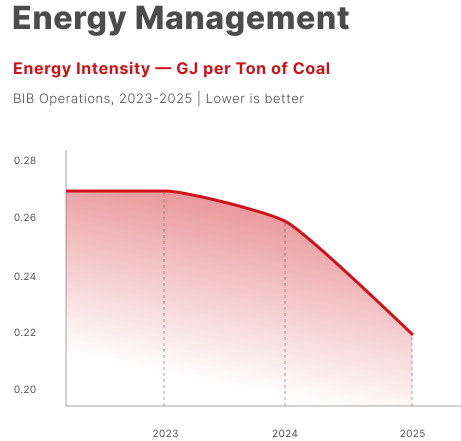
In 2025, despite an increase in coal production volume, total energy consumption is 8.1% lower year-on-year — demonstrating improved operational efficiency relative to output. Energy intensity declined to 0.22 GJ/ton of coal, compared to 0.26 GJ per ton in 2024. Total energy savings reached 1,837,444 GJ.
Greenhouse Gas Emission
Management
The Company acknowledges that energy use in mining operations generates greenhouse gas (GHG) emissions. The Company actively works to reduce its GHG emissions as part of its broader climate change mitigation strategy and contribution to slowing global warming — in alignment with Indonesia's net zero emissions target for 2060.
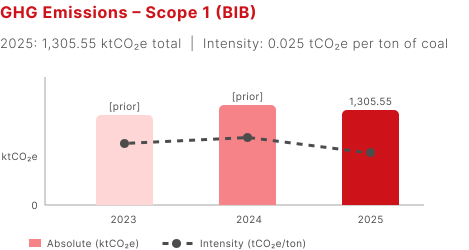
In 2025, BIB recorded total GHG emissions of 1,305.55 ktCO₂e, with an emission intensity of 0.025 tCO₂e per ton of coal. Full emission data, including Scope 1 figures and year-on-year trends, are disclosed in the 2025 Annual Report (pages 381–384).
Air Quality Management
Coal mining activities can generate air pollutants including nitrogen oxides (NOx), sulfur oxides (SOx), and total suspended particulates (TSP) — all of which can affect the health of communities near operational areas.
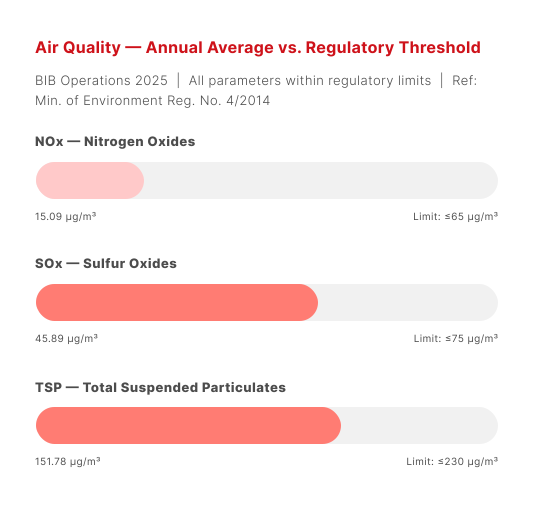
BIB implements a comprehensive air quality management program built around regular emissions monitoring, ensuring that air quality across all operational areas remains within government-mandated safety thresholds. The primary regulatory reference is Indonesia's Minister of Environment Regulation No. 4 of 2014 on Air Emission Quality Standards for Non-Stationary Sources in Mining.
In 2025, annual average measurements for NOx, SOx, and TSP at BIB's operational areas remained within regulatory limits. Detailed results are available in the 2025 Annual Report.
Waste Management
BIB's mining operations generate several categories of waste, each managed under a structured program aligned with Indonesia's environmental regulations.
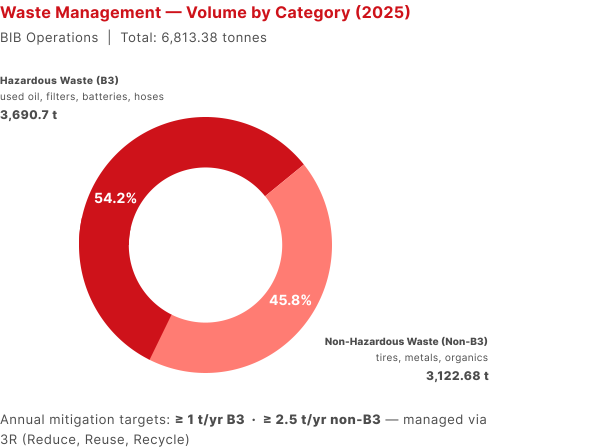
Waste types are classified into two main categories:
- Hazardous and toxic waste (B3): used oil, rags, filters, hoses, and automotive batteries
- Non-B3 waste: used tires, metals, paper, plastics, and organic materials
BIB manages waste through the 3R principle (Reduce, Reuse, Recycle), with annual mitigation targets of at least 1 ton/year for B3 waste and 2.5 tons/year for non-B3 waste. Advanced waste management technologies are deployed across all operations and licensed third parties are engaged for safe recycling practices.
Water Resource and Effluent Management
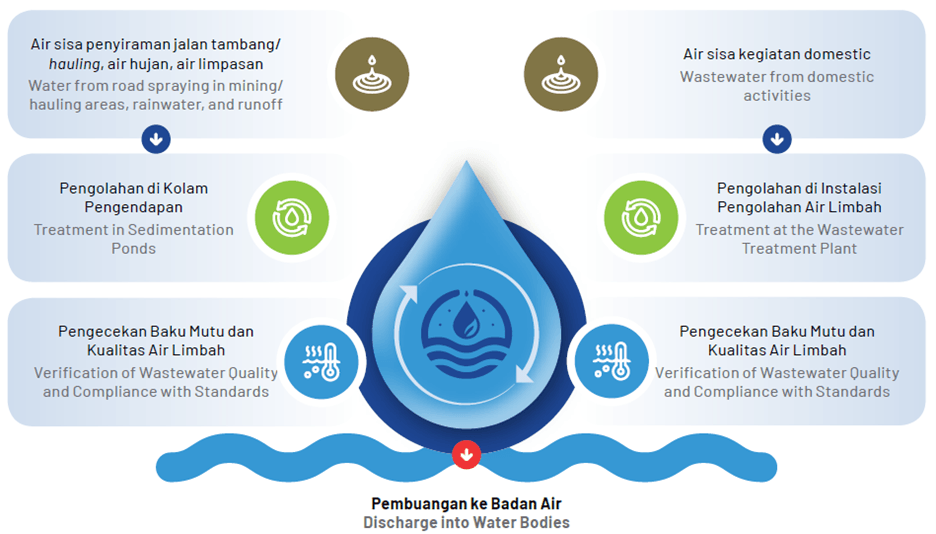
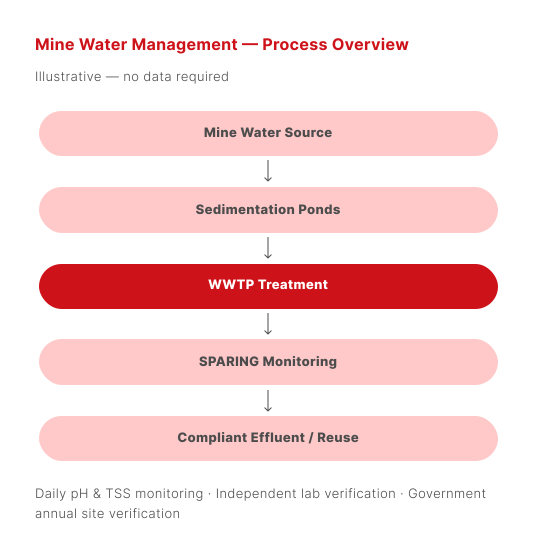
Responsible water use is a core element of the Company's environmental management program. Best-available technologies and practices are implemented to ensure that mine water and effluent quality consistently meets Indonesian government standards.
Key management measures include:
- Daily monitoring of pH and TSS parameters in line with AMDAL (Environmental Impact Assessment) procedures
- Operation of sedimentation ponds and wastewater treatment plants (WWTPs)
Land Management and Biodiversity
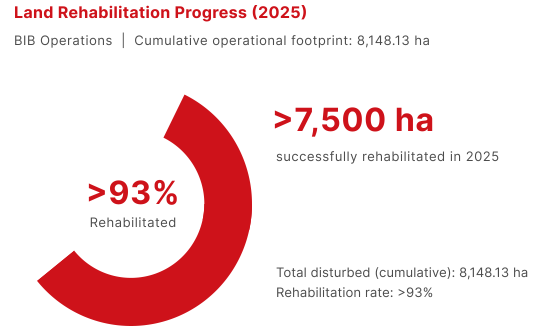
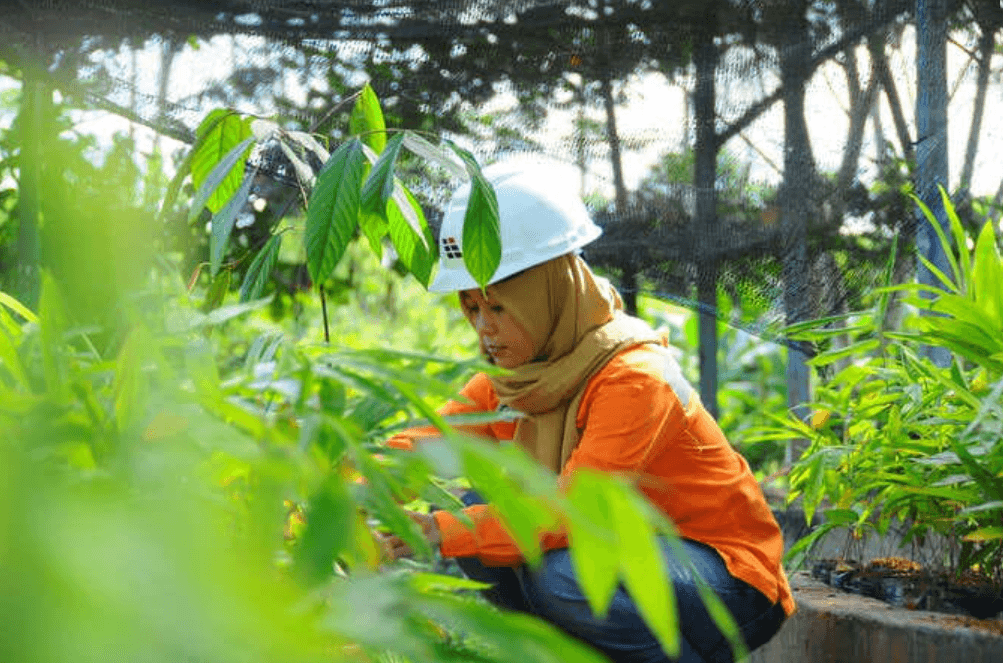
Mining activities directly or indirectly alter landscapes and natural habitats. BIB takes a structured, long-term approach to land rehabilitation to prevent erosion, landslides, and ecosystem degradation — both during operations and after mine closure.
In 2025, BIB successfully rehabilitated >7,500 ha, representing >93% with a cumulative operational footprint of 8,148.13 hectares area.
Detailed data on land rehabilitation progress, biodiversity protection programs, and post-mining land use planning are disclosed in the 2025 Annual Report (pages 405–413).
Environmental Evaluation and Independent Review
BIB conducts periodic environmental evaluations across its operational areas to ensure that all programs are performing as intended and remain in compliance with applicable regulations. Results are reviewed internally and inform continuous improvement planning.
An independent review of BIB's environmental data is conducted annually, covering the scope of BIB's operations. Details of the review scope and findings are available in the 2025 Annual Report (page 415).
Reporting Framework
The Company's environmental disclosures are prepared with reference to the Global Reporting Initiative (GRI) Standards, including sector-specific disclosures under the GRI Coal Sector supplement. The Company is also taking early steps toward alignment with IFRS S1 and IFRS S2 (climate-related disclosures), as part of its progressive approach to international sustainability reporting standards.