PILLAR 1
EDUCATION
SDG 4Scholarships, school infrastructure, literacy and skills programs.
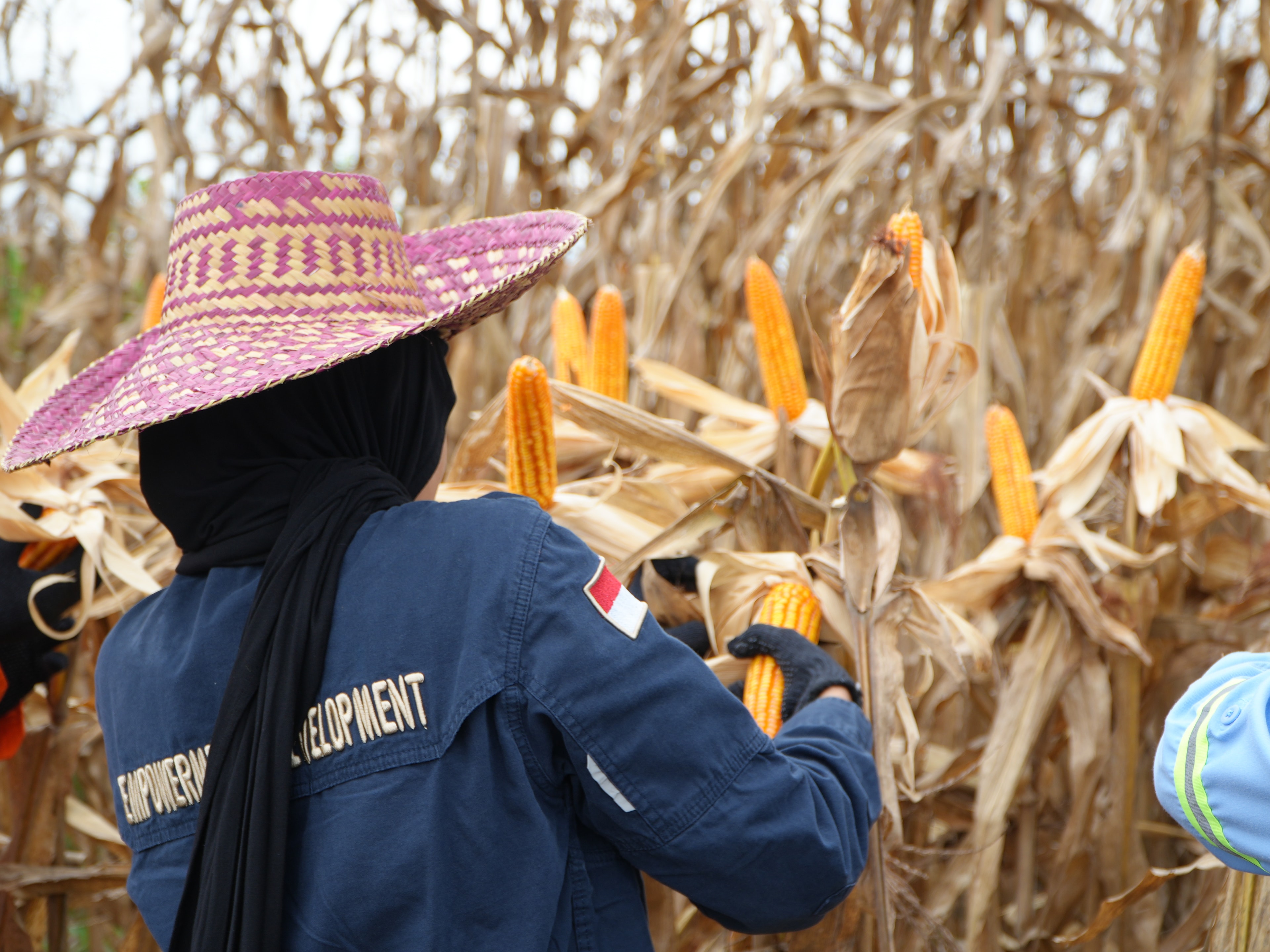
The social dimension of PT Dian Swastatika Sentosa Tbk's sustainability approach reflects the Company's belief that long-term business success and community wellbeing are inseparable. Across all of its business lines, the Company recognizes that it operates within and depends upon communities of people — employees, contractors, neighbors, and customers — and that caring for these communities is both a responsibility and a source of lasting value.
Scope of Social Data
Most of the social data presented on this page is reported from the perspective of PT Dian Swastatika Sentosa Tbk (DSSA) as the holding company. As the Company does not directly operate business sites or operational activities, the Company’s social and community development initiatives are implemented through its subsidiaries in accordance with the characteristics and needs of their respective operational areas.
For complete data, methodology, and program details, download the 2025 Annual Report, Chapter 6 (pp. 351–376).
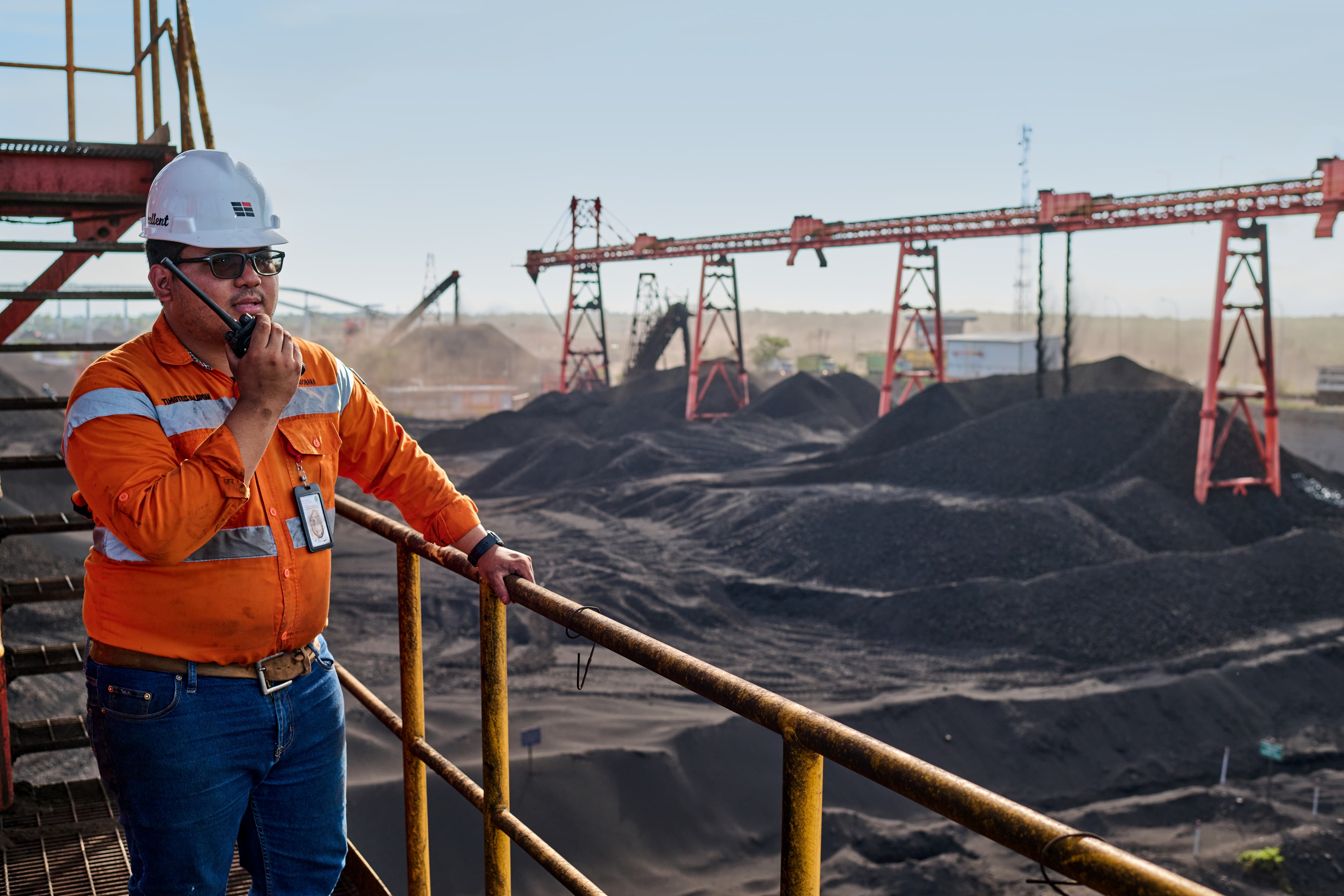
The Company employs a diverse workforce across its coal mining, energy, digital infrastructure, and chemicals operations. Regardless of background, the Company is committed to providing equal employment opportunities to all individuals with the competence, character, and work ethic to contribute to the business.
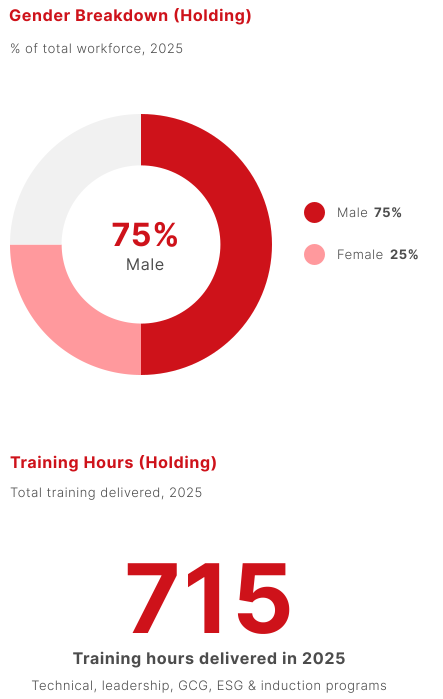
As of 31 December 2025, at the holding level, the Company employed a total of 2,016 employees. 25% of the Company's workforce is female employees, reflecting the Company's active commitment to inclusivity.
The Company provides competitive and fair compensation that accounts for position responsibilities, individual qualifications, performance results, and prevailing labor market conditions. Entry-level wages are set no lower than the applicable regional minimum wage (UMR). Benefits for eligible employees include health coverage, communication allowances, and vehicle benefits for certain levels.

The Company's approach to human rights is grounded in a firm belief that fair and respectful treatment of all people — employees, contractors, and community members — is both a moral obligation and a prerequisite for sustainable business. This commitment extends across the full value chain: from direct employment practices to supplier relationships and community interactions.
In practice, this means: no discrimination on the basis of ethnicity, religion, race, gender, age, or any other personal characteristic; zero tolerance for forced labor; a strict prohibition on the employment of underage workers; and enforcement of working hours in line with Indonesian national standards. The Company ensures that these standards apply not only to its own employees but also to its contractors and business partners operating within its areas of influence.
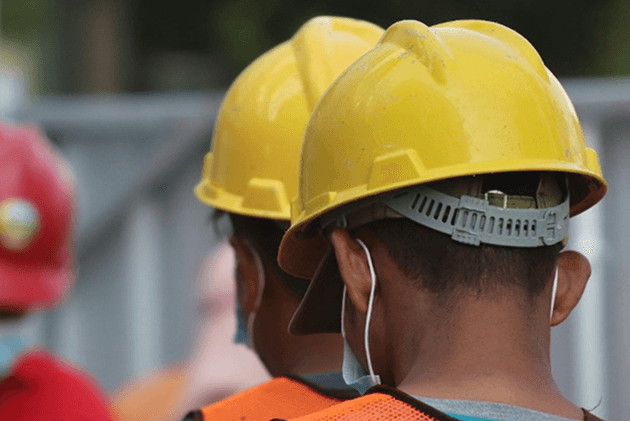
Creating a safe working environment is a non-negotiable priority for the Company. The Company’s mining operations involve inherent physical risks, and the Company's OHS program is designed to systematically identify, prevent, and manage those risks — protecting not only employees but also contractors, suppliers, and visitors in all operational areas.
The Company's mining subsidiaries OHS program operates under a comprehensive policy framework that includes the General Mining Safety and Environment (KPLH) Policy, Emergency Preparedness and Response Policy, Work Accident Policy, and Prohibition of Use of Drugs and Alcohol Policy. Strict OHS standard operating procedures apply to all employees, contractors, and third parties operating within all operational areas.
>
$M
ESDMK
PILLAR 1
Scholarships, school infrastructure, literacy and skills programs.

The Company is committed to playing an active role in empowering the communities surrounding all of its operational areas. Community development is a responsibility shared across business segments. The Company aspires to be a genuine engine of local social and economic development, creating impact that persists well beyond the operational lifecycle of any individual project.
The Company conducts its operations with a strong emphasis on business ethics, fair competition, and the maintenance of trust with all stakeholders. Key fair operating practice commitments include:
Full details of the Company's GCG implementation, whistleblowing system, and compliance practices are disclosed in the 2025 Annual Report (Corporate Governance section, pp.160–329).
FULL DATA & METHODOLOGY
2025 Annual Report — Chapter 6: Environmental Aspects (pp. 377-414)
As of 31 December 2025
%
Female employees
Lost Time Injury Frequency Rate 2025
HRS
Total training delivered 2025
>
Communities reached in 2025
$M
Community program spend 2025
Key OHS programs and measures include:
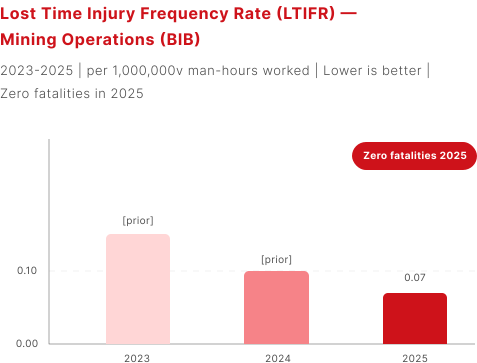
In 2025, BIB recorded a Lost Time Injury Frequency Rate (LTIFR) of 0.07. There was zero fatalities recorded across all operations during the reporting period. Full OHS performance data, including near-miss rates and total recordable incident data, is available in the 2025 Annual Report (pp.353–369).
The Company is committed to playing an active role in empowering the communities surrounding all of its operational areas. Community development is a responsibility shared across business segments. The Company aspires to be a genuine engine of local social and economic development, creating impact that persists well beyond the operational lifecycle of any individual project.
The Company's flagship community development framework is BIB's PPM (Community Development and Empowerment) Program, which represents the Group's largest and most structured community investment. The program is guided by the Decree of the Minister of ESDM No. 1824K/30/MEM/2018 and structured around 8 strategic pillars aligned with the UN Sustainable Development Goals (SDGs).
In 2025, across all businesses the Company's community programs collectively reached an estimated >60,000 beneficiaries, with a total community investment of 12.7 million USD.
PILLAR 2
Health access programs, awareness campaigns, local health facilities.
PILLAR 3
MSME empowerment and income-generating activities for communities.
PILLAR 4
Cultural heritage preservation and community identity.
PILLAR 5
Community conservation and green livelihood programs.
PILLAR 6
Roads, clean water, places of worship, public spaces.
PILLAR 7
Long-term community self-reliance beyond the mine's operational period.
PILLAR 8
Training, mentoring, institutional capacity development.