PT DIAN SWASTATIKA SENTOSA TBK
Sustainability Overview
Rooted in Integrity,
Driven by Responsibility,
United for the Nation.
These principles guide how PT Dian Swastatika Sentosa Tbk (DSSA) conducts its business, manages its operations, and creates long-term value.
Over nearly three decades, the Company has grown through business diversification across coal mining, new and renewable energy, digital infrastructure, and chemicals. Alongside this growth, the Company continues to strengthen its approach to sustainability by integrating environmental, social, and governance considerations into business strategy and decision-making.

Sustainability Governance
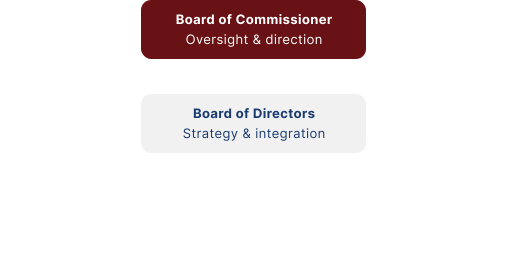
Sustainability governance at PT Dian Swastatika Sentosa Tbk is anchored at the Board level. The Board of Commissioners provides oversight of the Company's sustainability direction, while the Board of Directors is responsible for integrating sustainability considerations into the business strategies. The Company's sustainability governance structure is disclosed in full in the 2025 Annual Report (Sustainability Governance, p.333), including the roles and responsibilities of each governing body and the mechanisms through which sustainability performance is monitored and reported.

Sustainability Strategy and Framework
The Company's sustainability strategy is built on the conviction that environmental stewardship, social responsibility, and sound economic management are mutually reinforcing — not trade-offs. The Company organizes its sustainability commitments around three interconnected pillars:
Integration of ESG in Long-Term Business Planning
ESG considerations are embedded throughout the Company's long-term business planning cycle — from strategic goal-setting and capital allocation through to operational execution and performance monitoring. This integration ensures that sustainability is not an afterthought, but a standing input to the decisions that shape the Company's future.
The Company's strategic direction — diversifying into new and renewable energy, building digital infrastructure, and strengthening its chemicals platform — reflects an explicit recognition of the long-term risks posed by carbon transition and the opportunities created by Indonesia's energy and digital transformation. These strategic choices are themselves sustainability decisions, positioning the Company to remain relevant and resilient in a changing economy.
Explore Our Sustainability Pillars
FULL DATA & METHODOLOGY
2025 Annual Report — Chapter 6: Sustainability (pp. 330-453)